The Role of Specialized Clinical Research Staffing
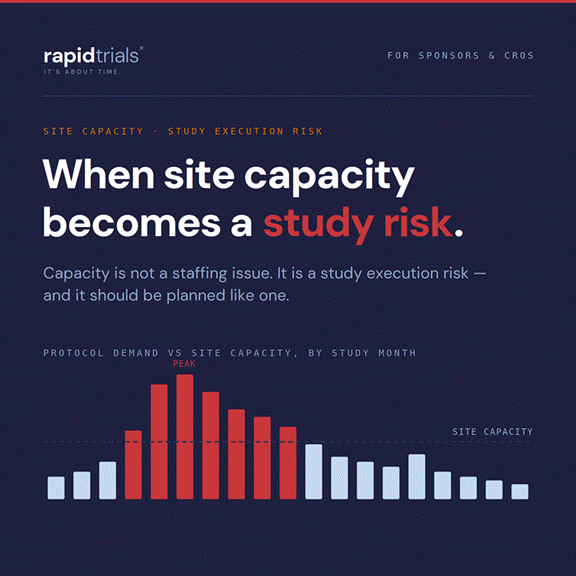
Protocol demand rarely matches flat site capacity. The red months are where studies break.
Clinical trials are becoming more demanding, and the investigative site is increasingly the critical point at which study execution succeeds or falters.
Protocols require sites to coordinate complex visit schedules, eligibility assessments, laboratory procedures, electronic systems, safety reporting, data entry, query resolution and participant communication — often while managing several studies simultaneously.
When the operational demands of a protocol exceed a site’s available research capacity, the consequences can extend across the study: slower prescreening, recruitment bottlenecks, delayed data entry, unresolved queries, missed visit windows and increased risk of protocol deviations.
Site capacity should be viewed not simply as a staffing issue, but as a study execution risk.
ICH E6(R3) reinforces this principle by emphasizing the need for sufficient qualified personnel, adequate resources, appropriate delegation and investigator oversight.
The Question Is Changing
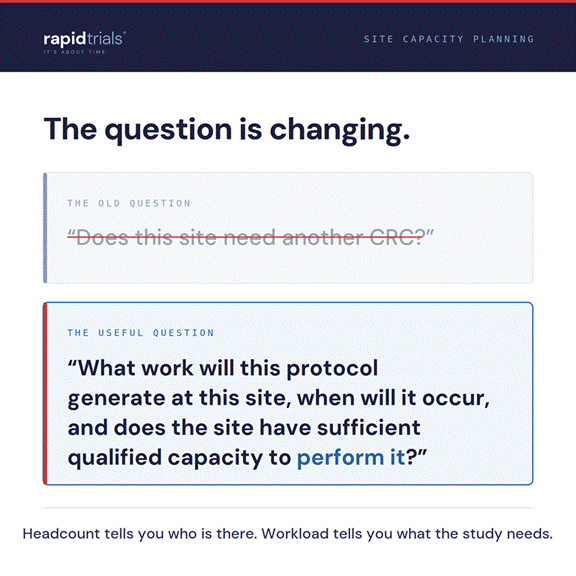
For Sponsors and CROs, the more useful question is no longer simply, “Does this site need another CRC?”
It is: “What work will this protocol generate at this site, when will that work occur, and does the site have sufficient qualified capacity to perform it?”
That distinction matters.
Site Workload Is Rarely Constant — Staffing Assumptions Often Are
Site workload shifts across a trial. Screening may require extensive chart review and patient outreach. Enrollment may create concentrated visit and laboratory activity. Later phases may shift the burden toward data reconciliation, query resolution, long-term follow-up or closeout.
Yet staffing assumptions are still often based primarily on headcount or enrollment projections. That can create two costly scenarios:
- Too much capacity during relatively quiet periods, and
- Too little capacity when protocol workload peaks.
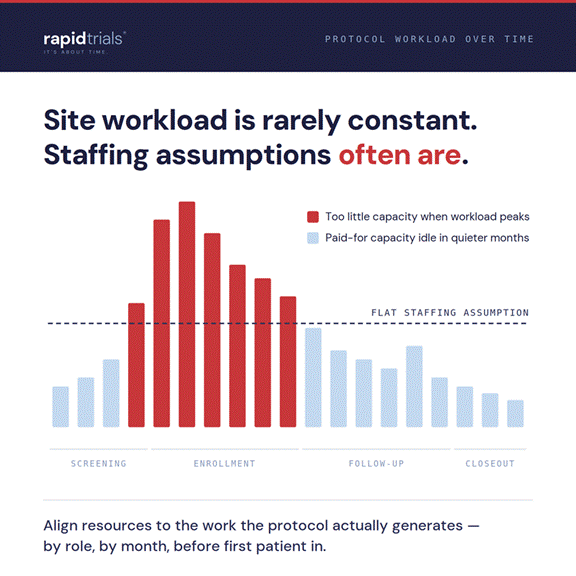
A flat staffing assumption guarantees both idle capacity and capacity shortfalls across the same study.
Align Resources to the Work the Protocol Actually Generates
A more effective approach is to align resources to the actual work generated by the protocol. Depending on the study and the site, that may mean adding an experienced CRC, research nurse, clinical data coordinator, patient navigator or other qualified research professional for a defined period or activity.
The objective is not simply to add personnel. It is to remove a specific operational constraint before it affects recruitment, participant experience, data quality or study timelines.
This is especially important in studies with high prescreening volumes, significant screen-failure rates, complex eligibility criteria, genetic testing, specialty laboratory requirements or intensive participant education.
Recruitment Strategy and Site Capacity Belong Together
Increasing referral volume has limited value if the site does not have the capacity to review charts, contact patients, resolve eligibility questions and accommodate screening activity. In that environment, recruitment performance can become a downstream capacity problem.
From Reactive Staffing to Proactive Workload Planning
The opportunity for Sponsors and CROs is to move from reactive staffing to proactive workload planning. Instead of waiting for enrollment to slow, queries to accumulate or a site team to become overwhelmed, protocol requirements can be translated into anticipated operational workload before those constraints become visible.
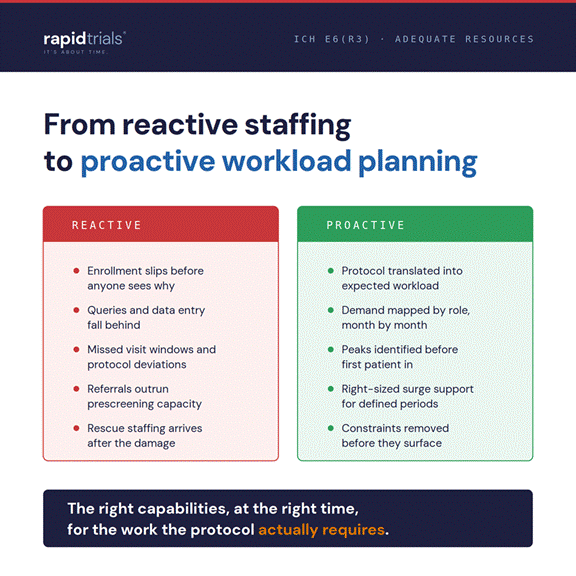
Reactive staffing responds to damage already done. Proactive planning removes constraints before they surface.
That is the broader shift taking place in clinical trial resourcing. The question is becoming less about how many people a site has and more about whether the site has the right capabilities, at the right time, for the work the protocol actually requires.
That is where site capacity planning should begin.